Mountain Climbing, Ruth Glacier, Denali National Park
Mountain climbing, especially in winter is an exciting and challenging sport.
Evaluating the amount of loose snow and ice on a rock face, and anticipating the ever-changing weather conditions while sucking high altitude air, can influence the next spot you decide to plant your ice axe.
Looking up, a climber’s technical knowledge, fitness level, hydration intake, and body temperature, all have to be evaluated properly to match the degree the tectonic plates clashed millions of years ago.
I always marvel at the skill of a climber who is also the photographer. They carry the same gear, plus their camera gear, hold onto the same rock face, and then scale to a vantage point that will make a compelling image.
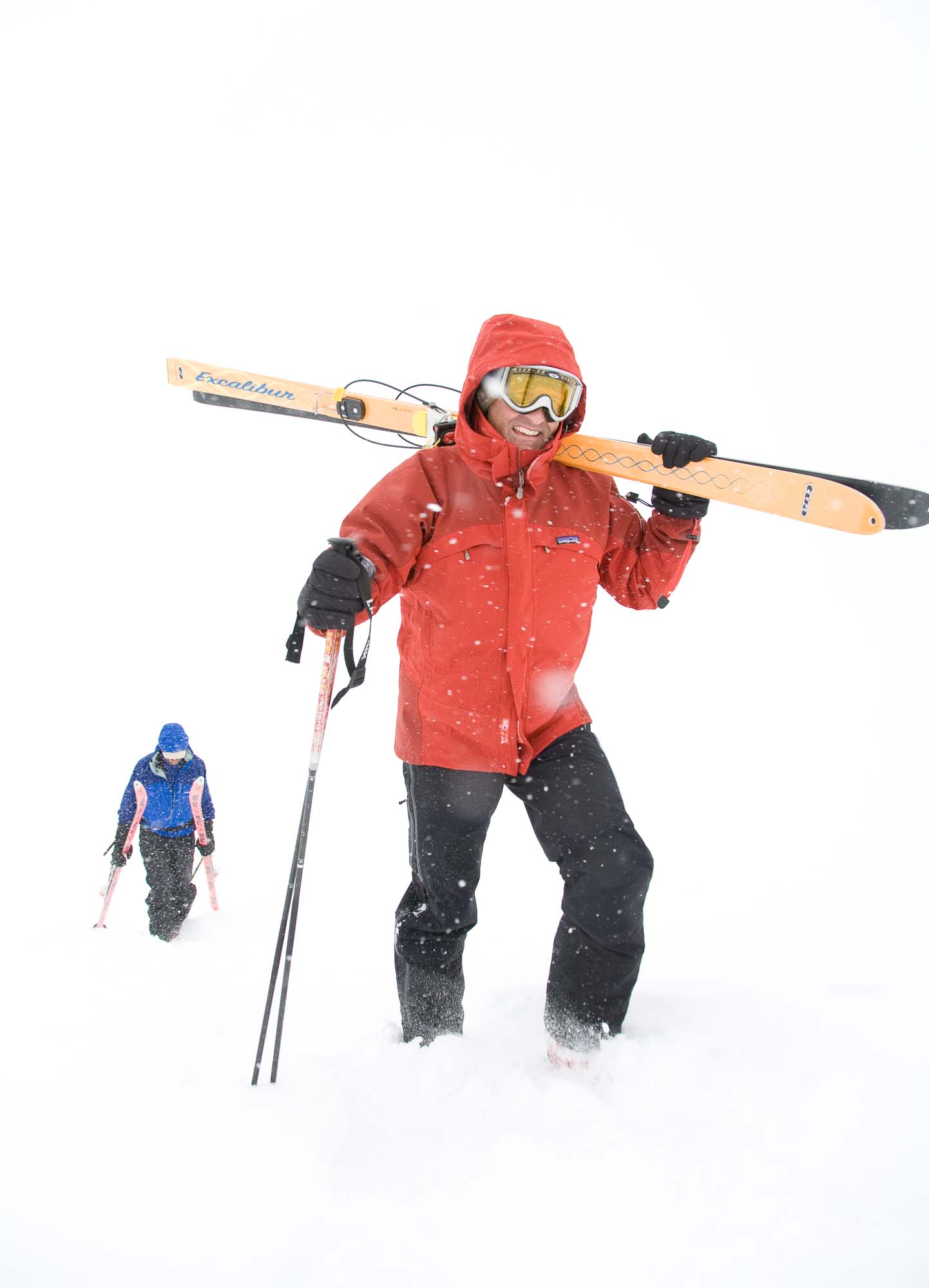
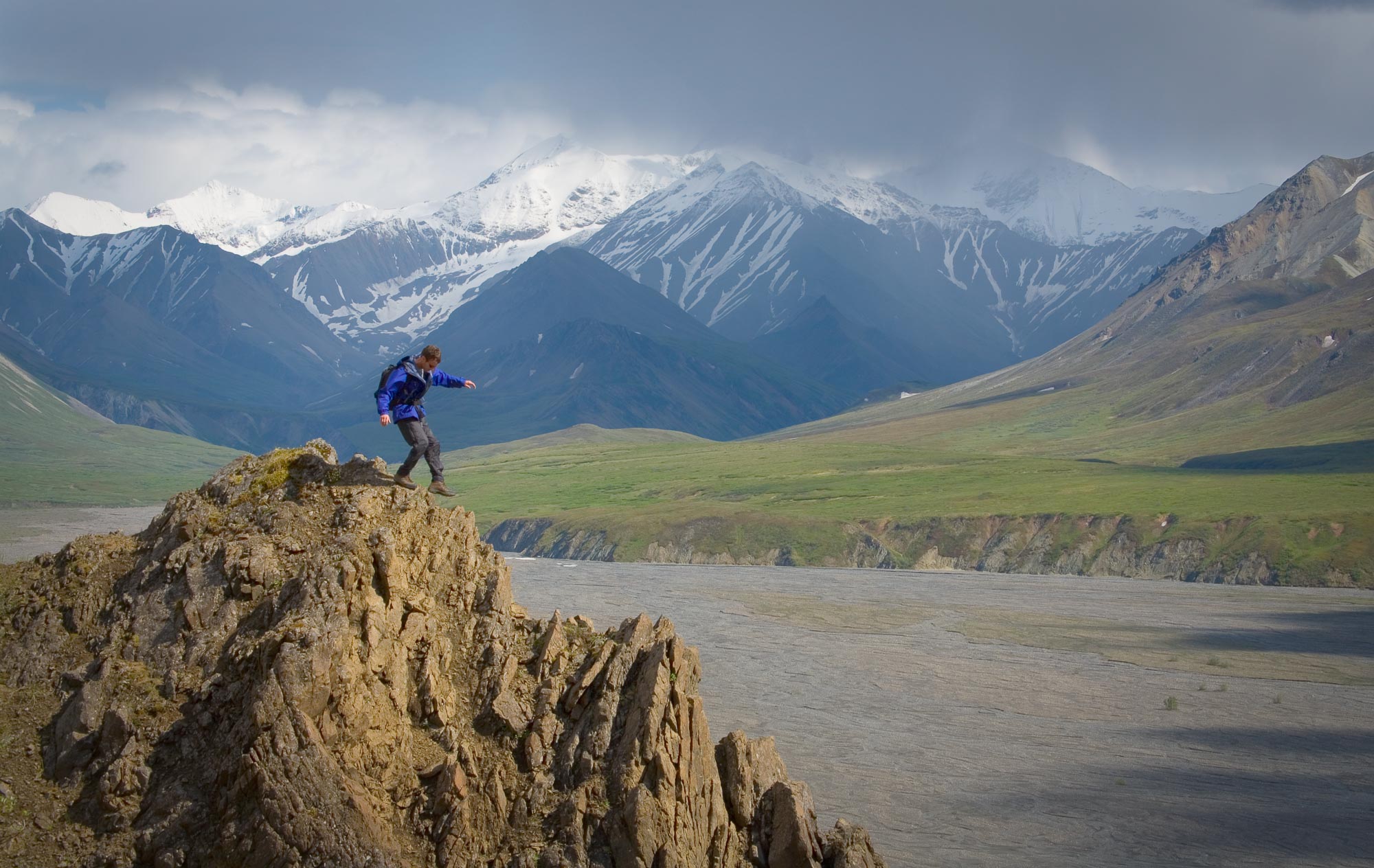
Yet, as a spectator, appearances can be deceiving. I’ve included the accompanying photograph below to illustrate how composition and focal length can make an easy technical climb look like something more precarious. One climber, one “well positioned” photographer….. and one wide angle lens.
Side note: Just off camera there was an assistant holding my cup of coffee.
For more image of Mountain Climbing visit my website

Photographing a mountain climber, Ruth Glacier, Denali National Park

Atlantic City Boardwalk
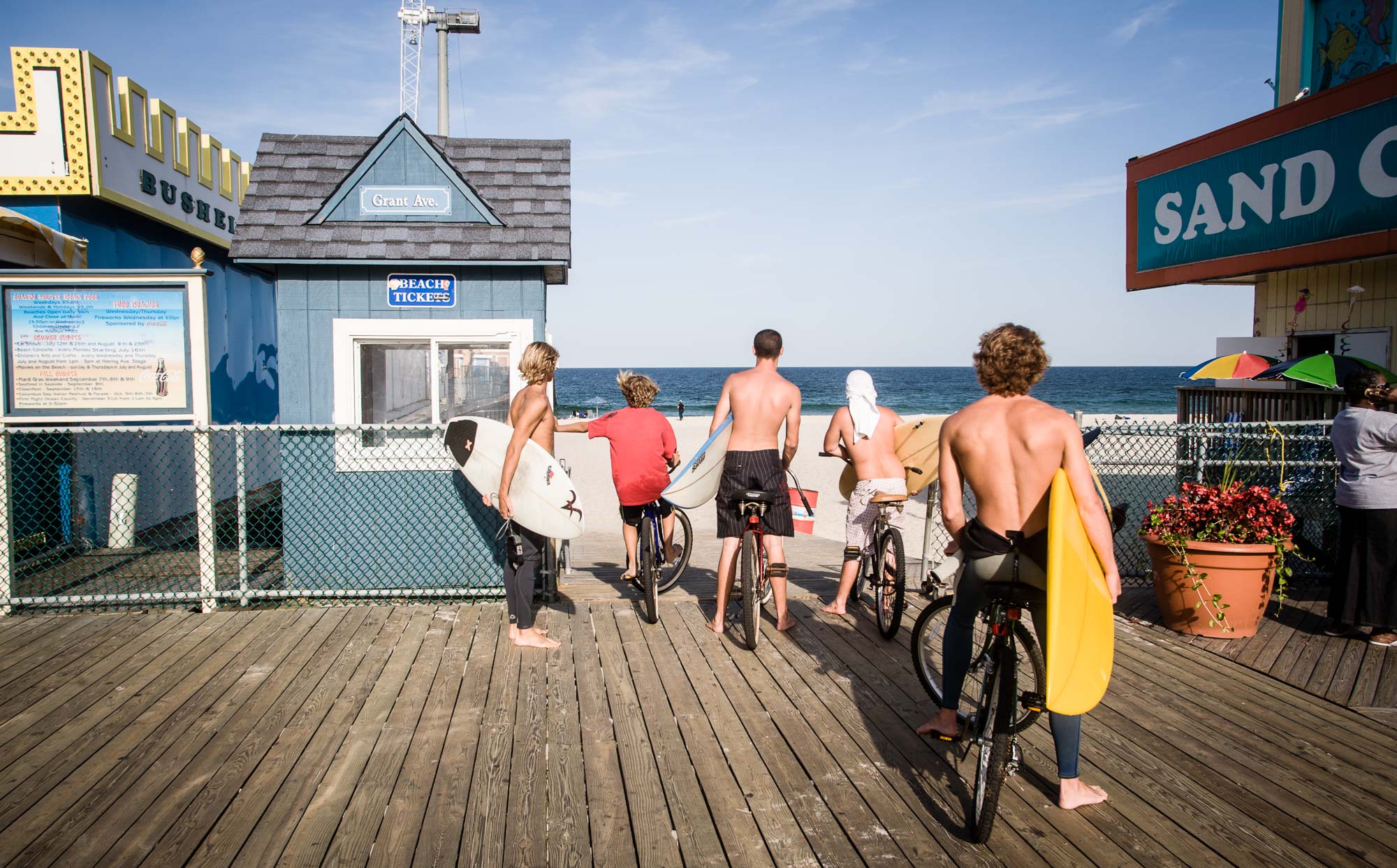
Summertime tourists enjoy the timed-honored tradition of walking Atlantic City’s famous boardwalk. With the casinos as a backdrop, the boardwalk attracts more than thirty million people each year.
Back in 1870, the casinos and hotels of Atlantic City had one big problem to contend with…SAND. It was everywhere, from the train cars to the hotel lobbies. Alexander Boardman, a conductor on the Atlantic City-Camden Railroad, was asked to think up a way to keep the sand out of the hotels and rail cars.
Costing half the towns tax revenue that year, an eight foot wide wooden foot walk was built from the beach into town. This first Boardwalk, which was taken up during the winter, was replaced with another larger structure in 1880. On Sunday September 9, 1889, a devastating hurricane hit the island, destroying the boardwalk. Most of the city was under 6 feet of water, and the ocean met the bay at Georgia Ave. The Boardwalk of today is 60 feet wide, and 6 miles long.
Atlantic City is also well known as the inspiration for the board game Monopoly.
For more images of Atlantic City visit my site

Brown Bear and her cubs looking for food
Of all the bedtime stories I’ve read to my kids where cute little bears play the main roles, nothing prepared me for the up-close and personal views of the Alaskan brown bear.
Katmai National Park is located at the head of the Alaska Peninsula approximately 290 air miles southwest of Anchorage, encompassing over 4 million acres of land and water. The park is famous for its brown bears and fish populations. Bristol Bay streams, including the Naknek River, are the source of some of the world’s largest salmon runs and have been for approximately the last 4000 years.
As a result, the brown bear of the Alaska Peninsula are big, really big. That size is a direct result of the abundance of spawning salmon, a nutritious and plentiful food source that contributes to rapid growth for feeding bears. The salmon make the bears what they are; without the profuse run of salmon, the bears would not come together in such high concentrations or attain such massive size.
Fishing in Katmai is defined by anglers as “combat fishing.” In peak bear viewing times, July to September, anglers spend much more time out of the water than in. The park has a rule, to stay a minimum of 50 yards away from a male bear and 100 yards from a sow with cubs. Of course, it can be challenging to fish in the Oxbow River and predict when a bear might play peek-a-boo as it emerges from the tall grasses that border each side of the river. It is good scary fun.
From my safe vantage point I was happy to see these 2 anglers taking turns to fish. It’s important to always have someone “spot” bears for you. Often anglers become so involved in fishing that they forget to watch for bears.
Even though the bears have become habituated with humans and there is such an abundance of salmon for the bears to feed on, it’s wise to keep your spider senses on full alert. Bears approach anglers because they have learned to recognize them as a source of food. Especially the splashing of a fish on line will often catch the attention of a bear. To fish here you have to know how to break your line quickly and move out of the water until the bear passes.
Carrying a camera instead of a fly pole, I was walking down a path from the beach to the Brooks Falls, when a curious juvenile male unexpectedly reared up in the tall grass just 12 yards ahead. This guy looked more like a dirigible in a fur coat and far less cuddly than anything I’ve seen at ‘Build a Bear’. I instinctively pointed the lens in his general direction, squeezed off a few frames, before bidding a methodical and slow retreat. I can laugh about it now, but at the time I remember hearing him doing the math: one 150-pound photographer equals 25 sockeye salmon averaging six pounds apiece. Hmmmm.
In a place where you are no longer on the top of the food chain, a little fear of these fabulous bears is a good idea. But you can’t let it from keeping you home. I hope someday to return to Katmai to wander carefully among these fabulous bears. They really are what make Katmai so very special.
For more images of the Katmai bears and their home visit my website

Children bobbing for Apples
Apple bobbing is an annual autumn event at my house. I invite some friends over, I mean unsuspecting models, so they can plunge their faces into the water and reach helplessly for a red orb with their teeth. I just had to see what was happening inside that bucket!
The only way I was going to get inside this pail is to become the size of an apple, or my camera is. Because I cancelled my photography insurance policy and the gaskets on my camera are not waterproof, I needed a different approach. Instead I built a custom glass aquarium measuring 30”x30”x16” tall.
Supporting the tank above the ground, I use concrete blocks at each corner. My camera is placed underneath the tank and tight up against the glass to avoid any reflections. Black cloth is spread out on the patio deck to stop any reflections of the deck into the tank too.
I have one strobe for side lighting – to add shape and contours to the apples, and I have another strobe high above the tank to achieve some rim lighting of the snorkelers and add specular rays. All these strobes are set off by a fill light strobe pointing straight up into the tank.
The biggest challenge is to convince folks not to breathe out while under the water – the millions of backlit bubbles are a nightmare to contend with.
Every year the kids always have a great time laying under the aquarium watching friends and family squirrel they faces into unforgiving knots.
For more images of people taking the plunge visit my website

New Jersey Performing Art Center
Situated on the Newark riverfront, the New Jersey Performing Arts Center (NJPAC) is a 250,000 square-foot facility housing the 2,750-seat Prudential Hall. In a word, it’s impressive.
With the throngs of adoring public that come to see and hear live performances from world class artists every year, the audience is familiar with the predictable vantage point from their comfortable seats.
Sitting at one of the concerts I wondered what it would look like from the musicians point-of-view, looking out at such a lavish setting with 2750 pair of eyeballs all trained on your ability to draw the bow, pluck the strings, blow the horn, and feather the reed. Gulp – no pressure.
After reassuring the administration, musicians, and sound engineers, the logistics began. Strategically placed between one of the reveals in the sound reflectors, the camera had to be completely concealed, with the exception of the lens. And as to not disrupt the musicians from reading the overwhelming black blotches on their music sheets, I could only release the shutter when the music reached a crescendo. My worst fear was that one of the suspended microphones over the instruments would pick up the click, click, of the shutter – yikes.
The shutter was released via remote control. If you look closely you can see me in the nose bleeds.
I think I was more nervous than the musicians. Except for maybe the guy on the kettle drums. After all, unlike the numerous violins that can hide their occasional staccato when it has one too many slurs, there is no place to hide when you have the only mallet to thump, on such a stand alone instrument.
For more images of New Jersey Performing Arts Center visit my site